Social Studies for a Better World
Timeless frameworks, critical questions, and practical classroom guides that help educators teach history, society, and identity with truth, care, and civic action.
View Books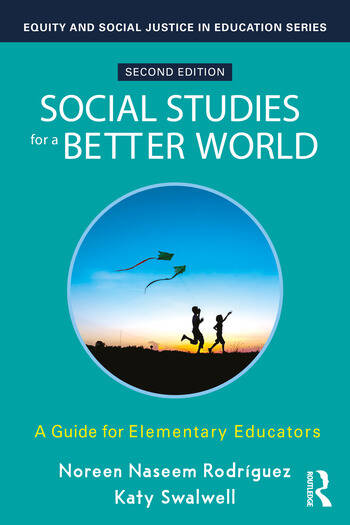
K–5 Elementary Education
A Guide for Elementary Educators
A diverse democracy like the United States needs today's young learners to be prepared to develop solutions to a host of entrenched and complex issues, including systemic racism, massive environmental problems, deep political divisions, and future pandemics that will severely test the effectiveness and equity of our health policies.
What better place to start that preparation than with a social studies curriculum that enables elementary students to envision and build a better world?
In this engaging guide, two experienced social studies educators unpack the oppressions that so often characterize the elementary curriculum—normalization, idealization, heroification, and dramatization—and show how common pitfalls can be replaced with creative solutions. Whether you're a classroom teacher, methods student, or curriculum coordinator, this is a book that can transform your understanding of the social studies disciplines and their power to disrupt the narratives that maintain current inequities.

Dr. Noreen Naseem Rodríguez

Dr. Katy Swalwell
Reader Highlights
"Brilliantly conceptualized, Social Studies for a Better World offers essential insights for understanding the ability of social studies to help students decipher the past and make sense of the present. Equally important, it provides an easy-to-follow blueprint for classroom implementation. This is essential reading for anyone who believes in the power of social studies to transform society."
— Hasan Kwame JeffriesAssociate Professor of History, The Ohio State University
"Speaking as scholars, educators, mothers, and human beings, Noreen Naseem Rodríguez and Katy Swalwell offer the support and inspiration educators need to skillfully practice anti-oppression in our classrooms and to prepare children to carry that practice into their lives outside of school."
— Carla Shalaby, Elementary Educatorauthor of Troublemakers: Lessons in Freedom from Young Children at School
6–12 Secondary Education
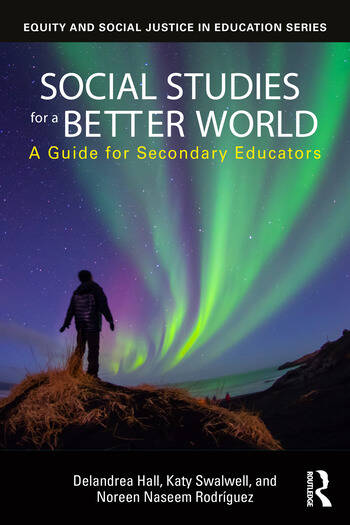
A Guide for Secondary Educators
Middle and high school students face an increasingly complex world of polarized narratives, systemic inequalities, and climate emergencies. This guide equips secondary social studies educators with practical pedagogy to scaffold rigorous lessons that address systemic power dynamics head-on.
Rather than dry facts and rote memorization, this handbook structures classrooms around investigative inquiry—examining power lines, territorial cartography, global labor markets, and student-led protest strategies.
Empower secondary students to think critically about geography, global capital, hard history, and modern civic organizing.
Reader Highlights
"A brilliant layout of secondary classroom realities. Perfect templates for deep systemic exploration."
— Dr. Marcus ReynoldsFaculty Advisor
"The exact guide needed to move middle-school social studies beyond simple timelines into true historic critique."
— Elena RostovaHigh School History Chair